Some things you only learn with time.
Not from a manual. Not from a quick tutorial. But from years of working with real pieces, fragile artwork, meaningful keepsakes, tricky materials, and everything in between.
At Frame Center, 50 years in the framing world have taught us a lot. And while styles and tools have evolved, the goal has always stayed the same: protect what matters and make it look its best.
Here’s a look at some of the tools and techniques we’ve refined over the years, and why they still matter today.
It Starts With the Right Materials
Back in the day, framing materials were… let’s just say, not always kind to artwork. Cardboard backing, acidic mats, and basic glass did the job visually, but didn’t do much for preservation.
Today, we rely on:
- Acid-free mats and backing
- Archival mounting materials
- UV-protective glass and acrylic
These aren’t just upgrades. They’re essential for keeping artwork from yellowing, fading, or breaking down over time.
Precision Cutting Makes All the Difference
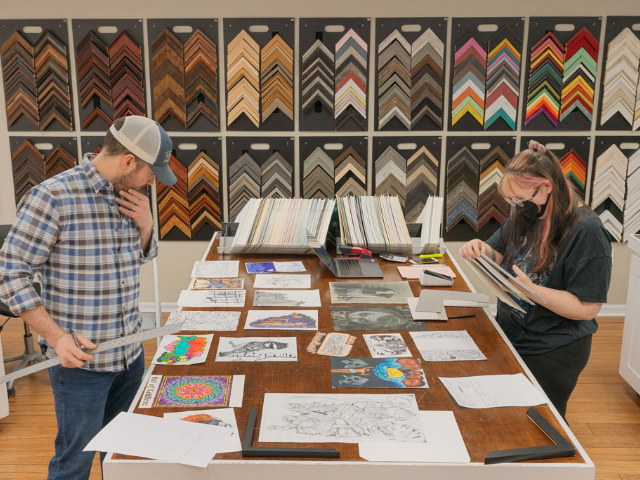
A frame might look simple, but getting those perfect corners and clean edges takes real precision.
Over the years, we’ve mastered:
- Exact mat cuts for clean borders
- Seamless frame joins
- Custom sizing for anything (and we mean anything)
It’s the kind of detail you might not notice right away, but you’d definitely notice if it were off.
Mounting Without Damage
One of the biggest lessons in framing? What not to do.
Tape, glue, and improper mounting can permanently damage artwork. And unfortunately, we’ve seen plenty of pieces come in after years of being “DIY’d” a little too aggressively.
That’s why we use conservation-safe techniques like:
- Hinging methods that don’t harm the paper
- Float mounting for delicate or deckled edges
- Proper support for heavier or oversized pieces
The goal is always the same: keep the artwork secure without altering or damaging it.
Framing Beyond the Flat Stuff
Not everything fits neatly into a standard frame, and honestly, those are some of our favorite projects.
Over the years, we’ve worked with:
- Jerseys and sports memorabilia
- Medals and awards
- Textiles and fabric pieces
- Shadowboxes with layered keepsakes
These projects take a mix of creativity and technical know-how to get right, especially when it comes to spacing, support, and long-term preservation.
Balancing Style and Function
Trends come and go. We’ve seen a lot of them.
But one thing we’ve learned is that great framing always balances style and function. It should look beautiful, yes, but it should also protect the piece and fit the space it’s going into.
Sometimes that means a bold statement frame. Other times, it’s a simple, clean design that lets the artwork do all the talking.
Knowing when to do which? That’s something experience teaches you.
Technology Has Changed. Craftsmanship Hasn’t
We’ve definitely upgraded our tools over the years. Modern equipment allows for more precision, more options, and more consistency.
But the heart of framing hasn’t changed.
It still comes down to:
- Careful handling
- Thoughtful design
- Attention to detail
- Respect for the piece
Because no matter how advanced the tools get, it’s the craftsmanship behind them that makes the difference.
50 Years Later, It Still Matters
After five decades, one thing is clear: framing isn’t just about presentation. It’s about preservation, storytelling, and creating something that lasts.
Whether it’s a piece of fine art, a family photo, or a simple keepsake with a big story behind it, we treat every project with the same level of care.
Because when something matters enough to frame, it’s worth doing right.
If you’ve got something you’ve been meaning to frame, stop by Frame Center or reach out to us. We’d love to help you create the perfect custom frame for it.